
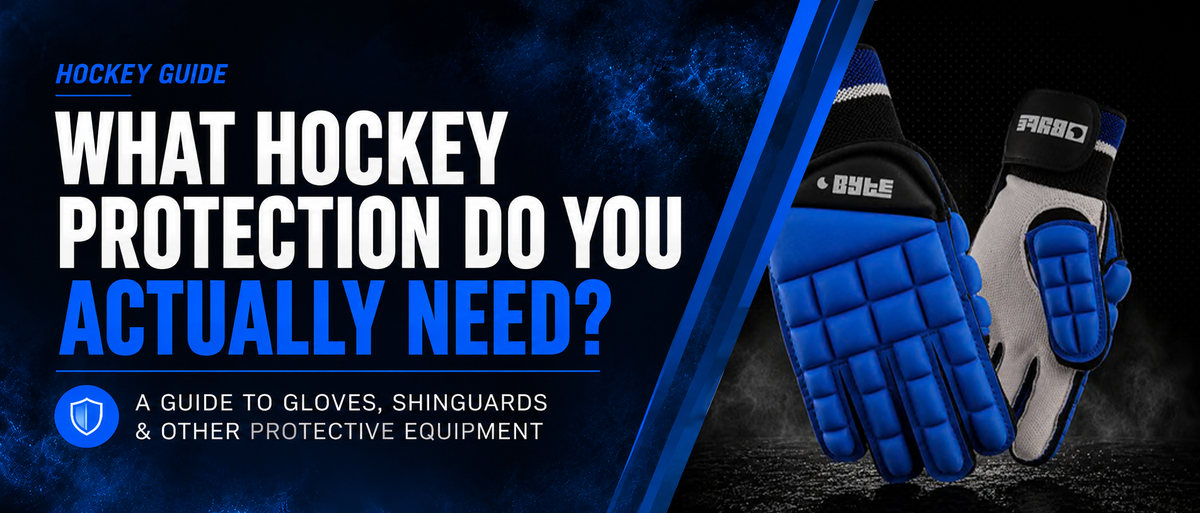
Hockey is a fast-paced sport, and whether you're playing your first match or competing every weekend, having the right protective equipment matters.
With fast-moving balls, swinging sticks and close challenges, even experienced players can take an unexpected knock. The right hockey protection can help reduce the risk of injury while allowing you to move comfortably and play with confidence.
But what protection do you actually need? And how do you choose between different types of hockey gloves and shinguards?
Here's what every field hockey player should know.
Are Shinguards Essential for Hockey?
Shinguards are one of the most important pieces of protective equipment for field hockey players.
Your lower legs are particularly vulnerable during tackles, interceptions and close-contact play. A properly fitted pair of hockey shinguards helps absorb and distribute impact from stray balls and accidental stick contact.
Shinguards are recommended under international hockey rules and are commonly required by clubs, schools and competitions.
What Should You Look for in Hockey Shinguards?
When choosing shinguards, consider three key features:
-
Protection: A durable outer shell helps protect your shins from impacts.
-
Comfort: Inner padding provides cushioning against your legs.
-
Fit: Shinguards should remain securely in place without restricting movement.
The best shinguards are ones you can comfortably wear throughout training and matches, rather than ones you're constantly adjusting.
Finding the Right Fit
Your shinguards should cover the vulnerable area of your shin, sitting comfortably below the knee without interfering with your footwear.
Avoid choosing a pair that's too short, too loose or uncomfortable when running.
At Byte Hockey, you'll find several options, including the MX Junior, SX, XR and ZT ranges, designed to accommodate different players and preferences.
Do You Need Hockey Gloves?
Unlike shinguards, protective hockey gloves aren't universally compulsory for outfield players, but they can be a valuable addition to your kit.
Your hands are regularly positioned close to the ball and opposition sticks, particularly when tackling, receiving low passes and defending.
Hockey gloves provide an additional layer of protection against accidental contact while helping players maintain confidence during close play.
Should You Wear One Glove or Two?
Many outdoor hockey players choose to wear a protective glove on their left hand.
For a typical right-handed hockey grip, the left hand remains towards the top of the stick and is often exposed during defensive movements.
However, some players prefer wearing gloves on both hands, particularly during indoor hockey or when additional protection is desirable.
The decision depends on your playing style, comfort and the level of coverage you want.
Different Types of Hockey Gloves Explained
Not all hockey gloves provide the same level of protection.
Understanding the different styles can help you find the right option.
Lightweight Hockey Gloves
Lightweight gloves are designed for players who want some additional hand coverage without significantly affecting their grip or movement.
They're worth considering for regular outdoor training and matches where comfort and flexibility are priorities.
Knuckle Protection Gloves
Knuckle gloves provide additional protection around the knuckle area, which can be particularly exposed during tackles and low stick movements.
They're popular with players who want more targeted protection while retaining freedom of movement.
Padded and Indoor Hockey Gloves
Indoor hockey involves close control, quick passing and frequent low defensive positions.
More substantially padded gloves can provide useful additional protection when players place a gloved hand close to the playing surface.
Byte Hockey also offers specialist left-hand gloves with additional padding, suitable for players looking for greater coverage during indoor or outdoor play.
When choosing a glove, remember that protection should not prevent you from gripping your stick securely or moving your fingers comfortably.
Explore Byte Hockey Protective Gloves
What About Mouthguards?
Although gloves and shinguards receive plenty of attention, mouthguards are another important part of hockey safety.
An appropriately fitted mouthguard helps protect your teeth and mouth from accidental impacts.
Mouth protection is recommended in hockey, and individual clubs or competitions may make it compulsory.
A properly fitted sports mouthguard should remain securely in place while allowing you to breathe comfortably.
If you're unsure which type is suitable, seek advice from a qualified dental professional.
Does Your Playing Position Affect the Protection You Need?
Your playing position can influence the situations you're exposed to, but protection isn't exclusively determined by whether you're a defender, midfielder or forward.
Defenders frequently make tackles and interceptions, so hand and lower-leg protection are especially worth considering.
Midfielders are constantly involved in challenges and transitions, making comfortable, secure protection important throughout a match.
Forwards often operate in crowded areas around the circle, where accidental stick and ball contact can occur.
Every outfield player should prioritise appropriately fitted shinguards and mouth protection, with gloves offering an additional layer of protection according to personal preference and playing conditions.
Players involved in penalty corner defence may also require specialist protective equipment in accordance with the applicable rules.
When Should You Replace Your Hockey Protection?
Protective equipment doesn't last forever.
Over time, repeated impacts, regular washing and general wear can affect its condition.
Check your equipment regularly for:
-
Cracked or damaged shinguard shells
-
Compressed or deteriorating padding
-
Loose straps or fastenings
-
Torn gloves or exposed protective materials
-
A poor fit caused by wear or changes in size
If your equipment is damaged or no longer fits securely, it's time to consider replacing it.
Play with Confidence, Stay Protected
Good hockey protection shouldn't feel like an inconvenience. It should allow you to concentrate on playing your game.
Whether you're buying your first pair of junior shinguards, upgrading your club hockey equipment or looking for additional hand protection, choosing the right fit and level of coverage is essential.
At Byte Hockey, we offer a range of protective equipment for developing and experienced players, with options designed to balance protection, comfort and freedom of movement.
Protect your game. Explore the Byte Hockey range.